Social bookmarking is one of the oldest off-page tactics in SEO, and one of the most misunderstood. Done carelessly it produces a pile of low-value links that do nothing; done deliberately it can speed up discovery of new pages, earn a few genuinely useful citations, and send real referral traffic. This guide covers what social bookmarking actually does today, how to do it without looking spammy, and how to measure whether it changed anything.
The short version: treat bookmarking as a discovery and citation tactic, not a ranking hack. Submit selectively to platforms people actually use, write each submission like a human would, and track indexing and referral data so you know what's working.
What social bookmarking is (and isn't)
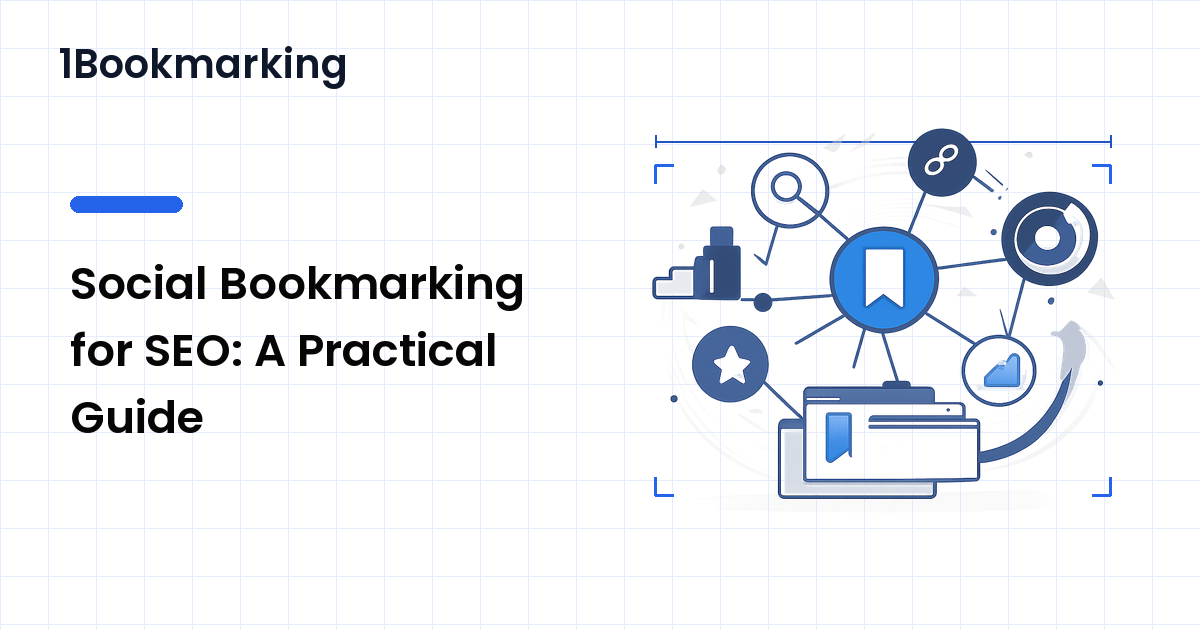
A social bookmarking site lets users save, tag, and share links to pages they find useful — think of a public, searchable bookmark folder. For SEO, the value is twofold: some bookmarks create crawlable links that help search engines discover a URL, and active communities can send curious visitors to it.
What it is not is a reliable way to build ranking authority. Most bookmarking links are nofollow or sit on low-authority pages, so they pass little to no link equity. If a tactic's only pitch is "instant backlinks," it will not move rankings on its own.
Does it still work?
Yes, but narrowly. The durable benefits today are:
- Faster discovery. A fresh, crawlable bookmark can get a new URL in front of crawlers sooner than waiting for internal links alone.
- Referral traffic. On platforms with real audiences, a well-placed, relevant submission earns clicks.
- Citation diversity. A handful of legitimate mentions across reputable platforms contributes to a natural-looking link profile.
The benefits that have largely evaporated are bulk "link juice" and keyword-anchored ranking lift from mass submissions. Search engines discount low-quality, repetitive bookmark links, and aggressive automation invites spam classification.
How to do it without looking spammy
The difference between useful and spammy bookmarking is mostly discipline.
Pick platforms by audience, not by DA alone
Choose sites where your topic has a real community and where submissions are moderated. A smaller, well-moderated platform with engaged users beats a large open one that accepts anything.
Submit selectively
Bookmark pages worth bookmarking — guides, tools, data, resources — not every thin page on the site. A few strong submissions outperform a hundred weak ones.
Write each entry like a human
Use a natural title and a genuine 1–2 sentence description. Vary anchor and description text across platforms; never paste the identical blurb everywhere. Tag accurately so the entry is findable.
Pace yourself
Spread submissions over time and across accounts you actually use. A burst of identical bookmarks from a fresh account is the clearest spam signal there is.
A simple, repeatable workflow
- Shortlist 8–15 reputable bookmarking and niche platforms relevant to your topic.
- Select the specific URLs worth submitting (your best resources, not everything).
- Draft a unique title + description for each submission; map a target tag set.
- Submit in small batches over days, from established accounts.
- Log every submission: platform, URL, date, link type (
dofollow/nofollow). - Measure indexing and referral traffic after 1–4 weeks (see below).
How to measure real impact
Without measurement, bookmarking is guesswork. Track three things:
- Indexing: did the submitted URL get crawled/indexed faster? Check coverage and crawl logs around the submission date.
- Referral traffic: are any platforms sending real, engaged visitors? Watch referral sources in analytics.
- Link status: is the link still live and
dofollowvsnofollow? Re-check periodically, since many decay.
If a platform produces no indexing benefit, no referral traffic, and only nofollow links that disappear, stop using it. Reallocate effort to the ones that earn discovery or clicks.
Social bookmarking vs other off-page tactics
Bookmarking is one tool among several. Directory submission overlaps but targets structured listings; both are discovery/citation tactics rather than authority builders. The heavier authority work — editorial links, digital PR, resource-page outreach — sits in broader off-page SEO. Use bookmarking to support discovery and round out a profile, not as a substitute for earning real links.
FAQ
Are social bookmarking links dofollow?
Some are, most are not. Treat dofollow as a bonus, not the goal — the discovery and referral value matters more than the link attribute on most bookmarking platforms.
How many sites should I submit to?
Quality over quantity. A focused set of 8–15 reputable, relevant platforms, submitted to selectively, beats mass submission to hundreds of open sites.
Can social bookmarking hurt my SEO?
Mass, automated, identical submissions can look spammy and waste effort, but a measured, human approach to reputable platforms carries little risk. The bigger risk is wasted time on platforms that do nothing.
How long until I see results?
Discovery effects can show within days; referral traffic builds over weeks. Give each platform 1–4 weeks before judging it, and keep the ones that earn indexing or clicks.
Next step
Build a submission-and-measurement checklist before your next campaign: shortlist reputable platforms, pick the URLs worth submitting, write unique entries, and log indexing and referral results so you keep only what works.