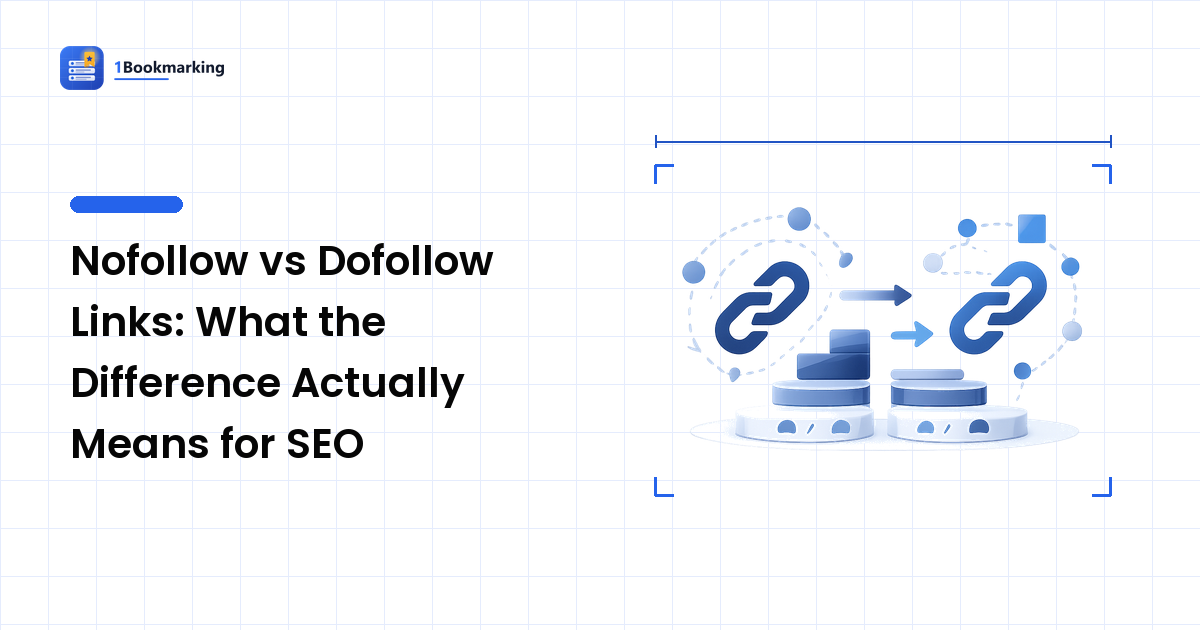
A dofollow link is an ordinary link with no restricting attribute, so search engines are free to follow it and pass ranking signals to the target. A nofollow link carries rel="nofollow", which tells engines the publisher does not vouch for it. "Dofollow" isn't real HTML — it's shorthand for the absence of nofollow. Both attributes describe endorsement, not whether a link works.
That distinction matters more than most link-building advice admits, because entire campaigns get built on the assumption that nofollow means worthless. It doesn't. It means unvouched. This guide covers what each attribute does mechanically, how the newer sponsored and ugc values fit in, where nofollow links still pull weight, and how to think about the mix on your own profile.
What does dofollow actually mean?
Nothing, technically. There is no rel="dofollow" in the HTML spec, and adding it does nothing. A "dofollow" link is just a normal anchor tag:
<a href="https://example.com/page">anchor text</a>
By default, search engines may crawl that link and use it as a signal — a vote that the target page is worth something, carrying the anchor text as a hint about the topic. The SEO industry coined "dofollow" purely to have a word for the default state, once nofollow existed to contrast with it.
The practical consequence: you never look for a "dofollow attribute." You look for the absence of a restricting one. That's the actual mechanic behind sourcing work like finding dofollow backlink sites — you're filtering for platforms that don't strip or restrict outbound links by default.
What does nofollow do, and why does it exist?
rel="nofollow" was introduced to fight comment spam. Blog comments, forum posts, and profile fields were being flooded with links purely to game rankings, and publishers needed a way to host user links without endorsing them.
<a href="https://example.com/page" rel="nofollow">anchor text</a>
Two things are worth being precise about. First, nofollow is a signal from the publisher, not a wall. Google has stated it treats these attributes as hints rather than absolute directives, meaning it may consider them for crawling and indexing purposes at its discretion. Second, nofollow was never about crawling in the way many people assume — a nofollowed URL can still be discovered, crawled, and indexed, especially if it's linked elsewhere. If a page depends on one nofollowed link for discovery, that's a fragile setup; see how links get found and counted for the mechanics.
What are rel="sponsored" and rel="ugc"?
Google later split the single nofollow signal into three more specific values so publishers could say why a link isn't an editorial endorsement. Use this as your reference:
| Attribute | Markup | What it tells search engines | Typical placement |
|---|---|---|---|
| Dofollow (default) | (no rel value) | Editorial link; may pass ranking signals | Body content, curated resource lists, citations |
| Nofollow | rel="nofollow" |
Not vouched for; general-purpose disclaimer | Untrusted or unverified outbound links |
| Sponsored | rel="sponsored" |
Paid, affiliate, or compensated placement | Ads, affiliate links, paid reviews, sponsorships |
| UGC | rel="ugc" |
Contributed by a user, not the publisher | Comments, forum posts, profile fields |
| Combined | rel="ugc nofollow" |
Multiple values are valid together | Moderated user content |
Practically, all three restricting values behave alike for link-equity purposes. The split exists so publishers can be accurate and so search engines get cleaner data about link types. If you accept payment for a link, sponsored (or nofollow) is required disclosure under Google's guidelines — not a style preference. Undisclosed paid links are one of the clearest link-scheme violations there is.
Do nofollow links help SEO?
Not in the direct "passes authority" sense the term implies. But writing them off is a mistake, for four reasons:
- Referral traffic. A nofollowed link on a busy, relevant page can send more qualified visitors than a dofollow link on a dead one. Traffic doesn't check the rel attribute.
- Discovery. Nofollowed links on frequently crawled pages still expose your URLs to crawlers, which is why bookmarking and social submissions can speed up discovery of new pages even when they're nofollowed.
- Brand mentions and citations. Many nofollow contexts carry your brand name, business details, or a topical association. Local citations work this way almost entirely — the corroborating mention is the point, not the link equity.
- Profile realism. A backlink profile made up exclusively of dofollow links is not what natural link acquisition looks like. Real sites accumulate nofollowed mentions from social platforms, news comment sections, and user-generated pages as a matter of course.
The honest framing: nofollow links are rarely the reason a page ranks, and they're a poor thing to buy in bulk. They are a normal, useful part of an off-page footprint. This is also why social bookmarking is worth doing deliberately and worth nobody's inflated promises — the great majority of bookmarking platforms nofollow their outbound links, so the payoff is discovery and referral traffic, not authority. Anyone selling "dofollow bookmarking packages" is usually selling either a misread of the platform or a platform nobody visits.
How do I check whether a link is nofollow?
Four methods, cheapest first:
- View source. Open the page source, find your URL, and read the
relvalue on the anchor tag. This is definitive. - Inspect the element. Right-click the link, choose Inspect, and read the rendered anchor tag. Useful when links are injected by JavaScript.
- Browser extension. Several SEO extensions highlight nofollowed links on a page visually — handy for scanning many links at once.
- Backlink tool filters. Most backlink tools report the attribute per link, which is the only workable option at scale across an entire profile.
Watch for two traps. Links can be nofollowed sitewide via a <meta name="robots" content="nofollow"> tag rather than per-link, and some platforms bounce outbound links through a redirect script that is itself blocked in robots.txt — functionally nofollow with no visible attribute. Check the real destination, not just the anchor.
What link mix should you aim for?
There is no correct ratio, and any specific percentage you see quoted is invented. The useful version of the question is: does your profile look like something a real, growing site would accumulate?
- Don't sort by attribute first. Relevance, placement, and the actual audience behind a page decide value. A nofollowed link from a publication your buyers read beats a dofollow footer link on a site nobody visits. Grading links properly is the whole subject of the link quality and measurement guide.
- Don't refuse placements because they're nofollow. Turning down a mention on a major, relevant site to chase a dofollow link on a worse one is a bad trade.
- Don't chase attribute-based volume. Buying "1,000 dofollow links" reliably produces links on sites that exist only to sell links — a spam signal, not an asset.
- Do build editorial links where you can. Genuine dofollow links from relevant sites remain the strongest off-page signal available. Curated, moderated directories are one of the few submission channels where an editorial dofollow link is still realistic — because a human reviews the listing.
FAQ
Is "dofollow" a real HTML attribute?
No. There is no rel="dofollow" value in the HTML spec, and adding one has no effect. "Dofollow" is industry shorthand for a normal link with no restricting rel value. When someone says a site is dofollow, they mean it doesn't apply nofollow, sponsored, or ugc to outbound links.
Are social bookmarking links nofollow?
Most of them, yes. Platforms that accept user-submitted links overwhelmingly apply nofollow or ugc to prevent spam. Treat bookmarking as a discovery and referral-traffic channel rather than an authority channel, and be skeptical of any service advertising bulk dofollow bookmarking links.
Can a nofollow link ever hurt my site?
A single nofollowed link almost never hurts you, and you generally can't be harmed by links you didn't place. What does cause problems is your own pattern: bulk-buying links, undisclosed paid placements, or mass-submitting to link farms — regardless of attribute. The fix is to stop the pattern, not to audit rel values.
Should I nofollow my own outbound links?
Only where accuracy calls for it. Use sponsored for paid or affiliate links (required disclosure), ugc for comments and user submissions, and nofollow for links you can't vouch for. Normal editorial citations to sources should stay follow — linking out to genuinely useful references is standard practice, not a leak of value.
Do nofollow links get indexed and counted in backlink tools?
Backlink tools typically report them, flagged by attribute, so they'll show in your profile counts. That's a reporting fact, not a ranking claim: seeing a nofollowed link in a dashboard doesn't mean it's contributing authority. Filter by attribute when you review, and judge the follow links on quality rather than counting everything together.
Next step
The attribute is the last thing to check, not the first. Ask whether the page is relevant, whether real people read it, and whether the placement makes sense — then look at the rel value to set expectations about what the link will and won't do. Build your off-page process around that order, and pick the tools to audit it with from the curated list of SEO tools for marketers and agencies.